
What Can Dogs Eat? — The Ultimate List
Can Dogs Eat Walnuts? Best Avoided: Which Nuts Are Dangerous
Free tool — no sign-up
Enter weight, age and body shape: 30 seconds and you get the daily portion.
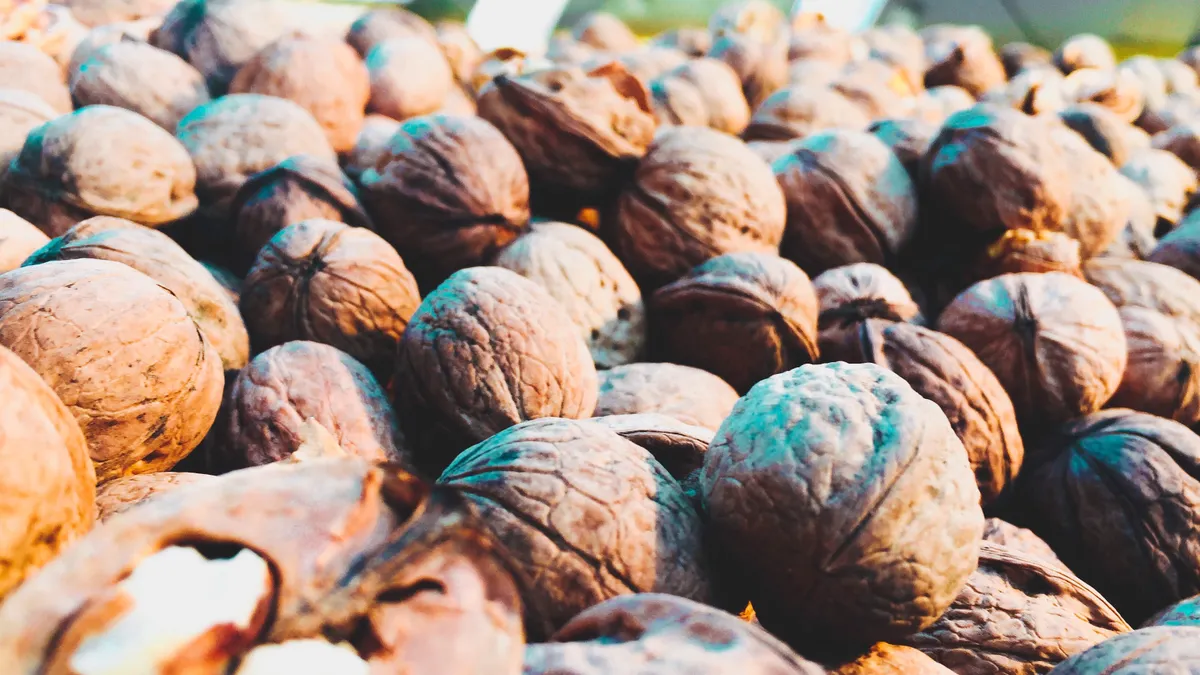
Can Dogs Eat Walnuts? Best Avoided: Which Nuts Are Dangerous
Walnuts are best avoided. One accidentally swallowed walnut half usually does no harm, but walnuts and most other nuts are a poor choice of treat.
Why walnuts are a problem
- Mold: old, damp or fallen walnuts can carry molds (tremorgenic mycotoxins) that cause tremors and seizures. Walnuts lying in the yard in the fall are the most common source
- Black walnuts: the nuts, hulls and fallen husks of the black walnut tree, common in US yards, are especially prone to this mold. Keep dogs away from them
- High fat: can cause diarrhea, vomiting and, in prone dogs, pancreatitis
- Choking and blockage: whole walnuts and shells can get stuck, especially in small dogs
Nuts at a glance
Get a personalized recommendation for your dog's issue →
| Nut | OK for dogs? |
|---|---|
| Macadamia | No, toxic (weakness, tremors, fever) |
| Black walnut | No (moldy hulls, tremors) |
| Walnut (especially old or moldy) | Not recommended |
| Pecan | Not recommended (mold risk) |
| Almond | Not recommended (choking, fat) |
| Pistachio | Not recommended (fat, shells, mold) |
| Hazelnut | Only 1–2 for a larger dog |
| Peanut, plain roasted, unsalted | Yes, a few |
| Cashew, unsalted | Yes, a few |
🚫 Never: salted, spiced, honey-roasted or chocolate-covered nuts, nut cakes, trail mix with raisins, or anything sweetened with xylitol.
What to do if your dog ate walnuts
- Check what kind of nut it was and whether it was moldy
- After a few fresh walnut pieces, watch your dog for 1–2 days
- Call your vet right away if your dog trembles, has a seizure, staggers, vomits repeatedly, has a bloated belly, or ate macadamia nuts or black walnut hulls
We have a separate article on peanut butter for dogs.
This is general information. For individual feeding questions, talk to your veterinarian.
Free tool — no sign-up
Enter weight, age and body shape: 30 seconds and you get the daily portion.
References
- 1.American Veterinary Medical Association — Household hazards: foods and substances that are toxic to pets. AVMA, 2024. https://www.avma.org/resources-tools/pet-owners/petcare/household-hazards (accessed: 2026-09-10)
- 2.Xenoulis PG, Steiner JM — Canine hyperlipidaemia. Journal of Small Animal Practice 56(10):595–605, 2015. https://doi.org/10.1111/jsap.12396 (accessed: 2026-09-10)
- 3.National Research Council (US), Committee on Animal Nutrition — Nutrient Requirements of Dogs and Cats. National Academies Press, Washington DC, 2006. https://doi.org/10.17226/10668 (accessed: 2026-09-10)
This is general information and does not replace a veterinary diagnosis.

This guide was compiled based on the expert input of Reka Fazekas-Birizdo canine nutritionist.
Certified Canine Nutritionist
Related articles
Personalized guidance
Personalized dietary analysis based on your dog's data, in 2 minutes.
Get my personalized diet reportFree. Ready in a few minutes.