
What Can Dogs Eat? — The Ultimate List
Can Dogs Eat Salmon? Yes, but Only Fully Cooked and Boneless
Free tool — no sign-up
Treats and human food together should stay under 10% of daily calories. Work out your dog's daily allowance.
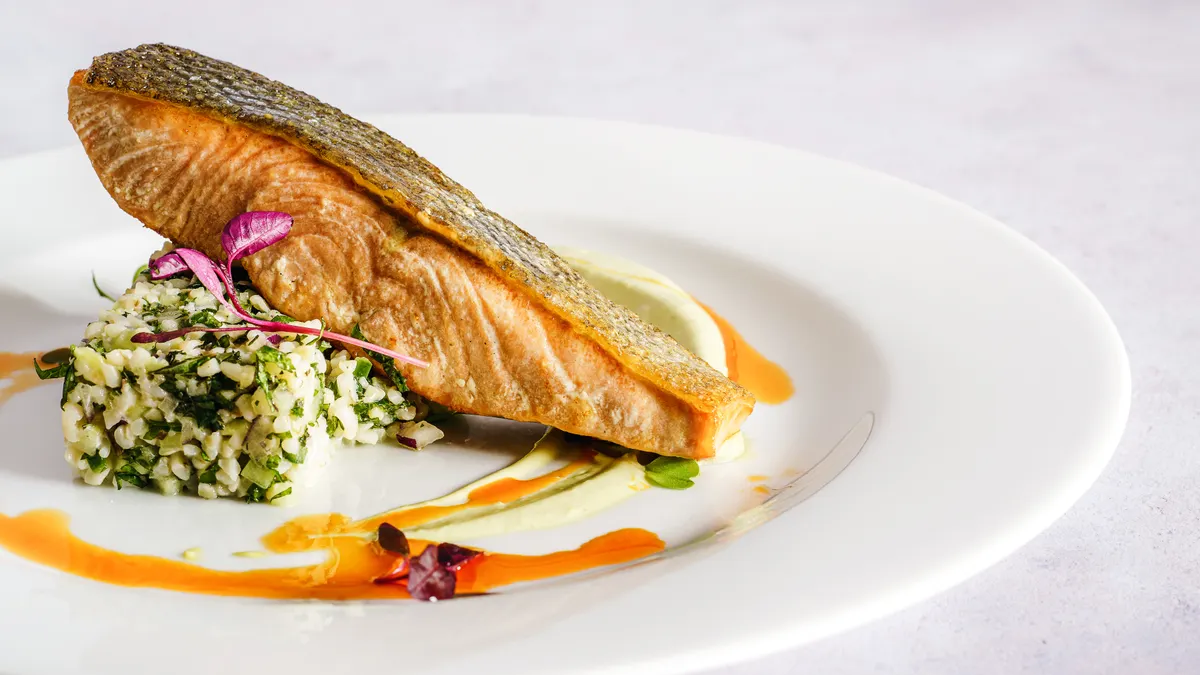
Can Dogs Eat Salmon? Yes, but Only Fully Cooked and Boneless
Yes, boiled, steamed or baked boneless salmon is a good choice for dogs. Raw or smoked salmon is not.
Why it's good
- Omega-3 fatty acids (EPA, DHA): skin, coat, joints
- High-quality protein
- Vitamin D and B vitamins
How to serve it safely
- Cook it through (boil, steam or bake) with no oil or seasoning
- Remove all bones: they can lodge in the throat or gut
- Serve small pieces on top of the regular food
Get a personalized recommendation for your dog's issue →
How much?
As a topper, once or twice a week:
- Small dog: 10–20 g (about 0.5 oz)
- Medium dog: 30–50 g (1–2 oz)
- Large dog: 60–100 g (2–3.5 oz)
Salmon is fatty, so count it in the daily calories.
What to watch out for
🚫 Avoid:
- Raw salmon, sushi: parasites and bacteria. In the Pacific Northwest, raw salmon and trout can cause potentially fatal salmon poisoning disease
- Smoked salmon: very salty, and cold-smoked salmon is essentially raw
- Seasoned, garlicky or buttered salmon
- Bones
⚠️ For dogs prone to pancreatitis, check with your vet first because of the fat content.
This is general information. Ask your vet about individual feeding questions.
Free tool — no sign-up
Treats and human food together should stay under 10% of daily calories. Work out your dog's daily allowance.
References
- 1.National Research Council (US), Committee on Animal Nutrition — Nutrient Requirements of Dogs and Cats. National Academies Press, Washington DC, 2006. https://doi.org/10.17226/10668 (accessed: 2026-09-10)
- 2.Cline MG, Burns KM, Coe JB, et al. — 2021 AAHA Nutrition and Weight Management Guidelines for Dogs and Cats. Journal of the American Animal Hospital Association 57(4):153–178, 2021. https://doi.org/10.5326/JAAHA-MS-7232 (accessed: 2026-09-10)
- 3.American Veterinary Medical Association — Household hazards: foods and substances that are toxic to pets. AVMA, 2024. https://www.avma.org/resources-tools/pet-owners/petcare/household-hazards (accessed: 2026-09-10)
This is general information and does not replace a veterinary diagnosis.

This guide was compiled based on the expert input of Reka Fazekas-Birizdo canine nutritionist.
Certified Canine Nutritionist
Related articles
Personalized guidance
Personalized dietary analysis based on your dog's data, in 2 minutes.
Get my personalized diet reportFree. Ready in a few minutes.