
Breed feeding guide
Labradoodle: weight chart and how much to feed
The Labradoodle is a crossbreed, so adult size varies more than in a pure breed. Typical adult weight: females 20–28 kg (44–62 lb), males 22–30 kg (49–66 lb); life expectancy about 12–14 years. The parents' size is the best guide for an individual puppy.
Prepared by the DogDietLab nutrition team · Updated: November 2026
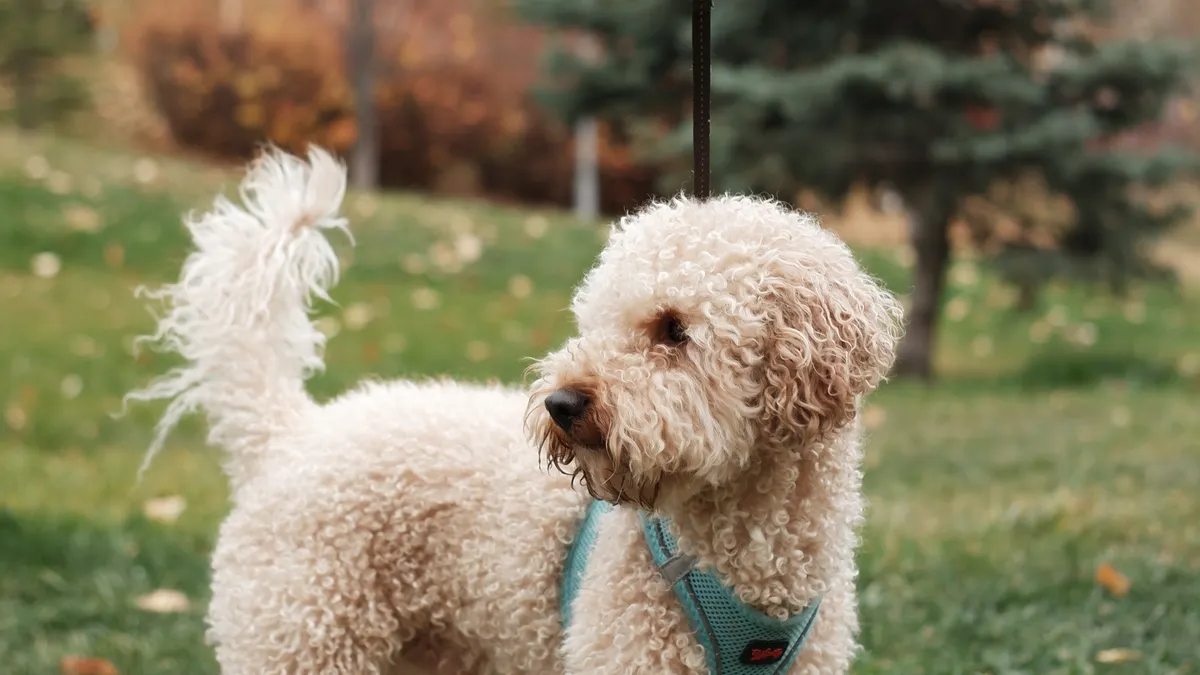
Labradoodle weight chart
- Adult weight, male
- 22–30 kg (49–66 lb)
- Adult weight, female
- 20–28 kg (44–62 lb)
- Height, male
- 55–62 cm (22–24 in)
- Height, female
- 53–60 cm (21–24 in)
- Life expectancy
- 12–14 years
- Size
- medium-sized
- Energy level
- high
- Origin
- Australia
- Fully grown at
- about 15 months
Labradoodle puppy weight by month
Typical weight range at each age, based on the breed's adult range and standard growth curves. Dogs of this size reach adult weight at about 15 months. The daily energy is for a normally active puppy, with puppy food of 380 kcal/100 g.
| Age | Expected weight | kcal/day | Puppy food, g/day |
|---|---|---|---|
| 2 mo | 4–6 kg (9–13 lb) | 870 | 230 g |
| 3 mo | 6.5–9.5 kg (14–21 lb) | 1,100 | 290 g |
| 4 mo | 9–14 kg (20–31 lb) | 1,250 | 330 g |
| 5 mo | 11–17 kg (24–37 lb) | 1,300 | 345 g |
| 6 mo | 13–20 kg (29–44 lb) | 1,330 | 350 g |
| 8 mo | 16–24 kg (35–53 lb) | 1,320 | 350 g |
| 10 mo | 18–27 kg (40–60 lb) | 1,300 | 345 g |
| 12 mo | 19–29 kg (42–64 lb) | 1,270 | 335 g |
| 15 mo | 20–30 kg (44–66 lb) | 1,250 | 330 g |
How much should an adult Labradoodle eat?
Daily energy need and dry food amount (360 kcal/100 g) by body weight. Neutered or calm dogs need the lower figures, intact or very active dogs the higher ones. Treats count toward the total and should stay under 10%.
| Body weight | Neutered or calm | Intact, normal activity | Very active |
|---|---|---|---|
| 20 kg (44 lb) | 930 kcal · 255 g | 1,060 kcal · 295 g | 1,320 kcal · 370 g |
| 23 kg (51 lb) | 1,030 kcal · 285 g | 1,180 kcal · 325 g | 1,470 kcal · 410 g |
| 25 kg (55 lb) | 1,100 kcal · 305 g | 1,250 kcal · 350 g | 1,570 kcal · 435 g |
| 28 kg (62 lb) | 1,190 kcal · 330 g | 1,360 kcal · 380 g | 1,700 kcal · 475 g |
| 30 kg (66 lb) | 1,260 kcal · 350 g | 1,440 kcal · 400 g | 1,790 kcal · 500 g |
Feeding notes for the Labradoodle
Nutrition-related tendencies reported for this breed. They are not a diagnosis: if your dog has symptoms, ask your vet.
Skin allergies and itching are common: omega-3 fatty acids (EPA + DHA from fish oil) support the skin barrier. Recurrent itching, ear infections or paw licking can point to a food allergy; an elimination diet with a novel or hydrolysed protein takes about 8 weeks.
Hip and elbow dysplasia and joint problems: a lean body condition throughout life is the best protection; omega-3 (EPA + DHA) can support the joints of adult dogs.
Very active breed: a working or sporting dog can need 20–50% more than the table on training days. Adjust the amount by body condition, not by habit.
Crossbreed: size and needs vary more than in a pure breed. Use the parents' weight as a guide and adjust the portion by body condition.
Get an exact plan for your own dog
The tables show typical values. The free DogDietLab report calculates the daily amount for your dog from its own weight, age, activity and health, and checks the food you use.
Frequently asked questions
How much should an adult Labradoodle eat per day?
A neutered dog of this breed weighing 25 kg (55 lb) with normal activity needs about 1,100 kcal per day, roughly 305 g of dry food at 360 kcal/100 g. Intact or very active dogs need more. Always check the energy content on your own food's label.
How much should a Labradoodle puppy weigh at 6 months?
At 6 months most puppies of this breed weigh about 13–20 kg (29–44 lb). Adult weight is reached at around 15 months.
What is the ideal weight of an adult Labradoodle?
The typical adult range is 20–28 kg (44–62 lb) for females and 22–30 kg (49–66 lb) for males. Within the range, body condition matters more than the scale: the ribs should be easy to feel and the waist visible from above.
Similar breeds
- Belgian Malinois
- Belgian Tervuren
- Belgian Sheepdog (Groenendael)
- Australian Shepherd
- Entlebucher Mountain Dog
- American Staffordshire Terrier
- Wirehaired Pointing Griffon
- Galgo Español