
What Can Dogs Eat? — The Ultimate List
Can Dogs Eat Cheese? How Much & What Kinds Are Safe?
Free tool — no sign-up
Enter weight, age and body shape: 30 seconds and you get the daily portion.
Can Dogs Eat Cheese?
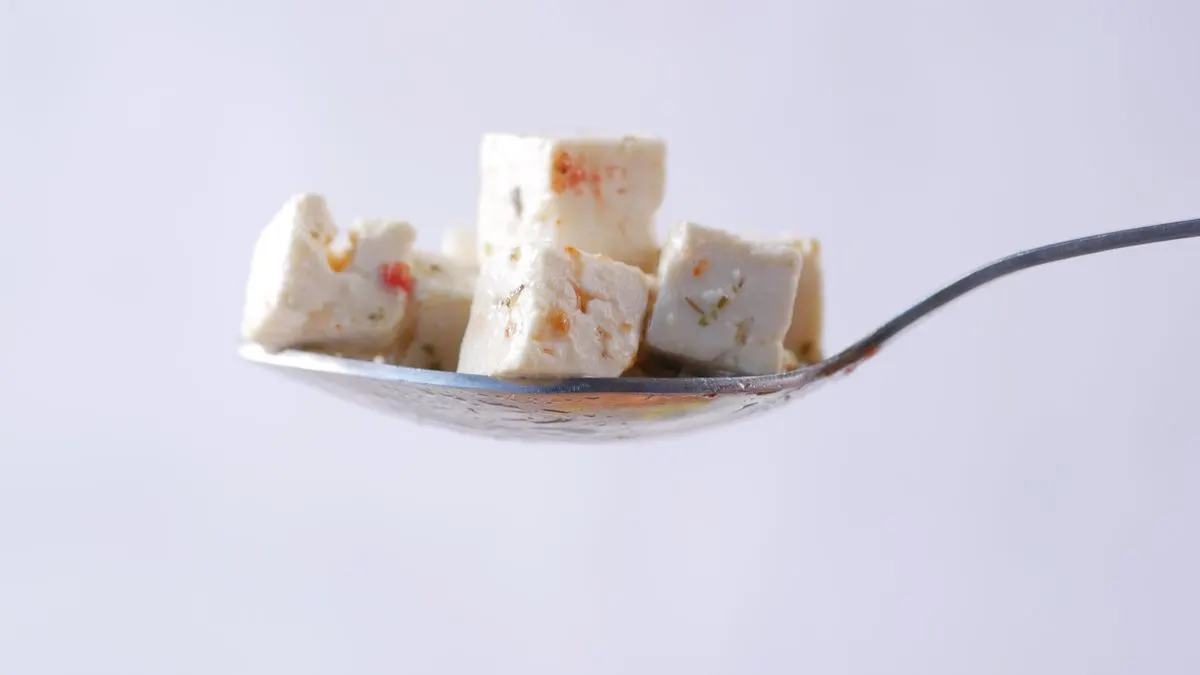
Yes, cheese is safe in small amounts, BUT it's often not recommended due to its high fat and salt content.
How Much Cheese Can Dogs Have?
- Mini1–5 kg3–5 g
- Small5–10 kg5–10 g
- Medium10–25 kg10–15 g
- Largeover 25 kg15–20 g
Cheese has about 350–400 kcal/100 g, so use it as a small treat, not as a food topper.
Which Cheeses Are Safe for Dogs?
Good Options:
- Cottage cheese (fat-free)
- Ricotta
- Mozzarella (unsalted)
Moderate Options (for training treats only):
- Cheddar, Trappist
Avoid:
- 🚨 Blue cheeses (Roquefort, Gorgonzola), toxic!
- ❌ Very salty cheeses (Parmesan, Feta)
- ❌ Very fatty cheeses (Brie, Camembert) and cream cheese in large amounts
Moldy Cheese: NEVER
Blue/moldy cheeses (Roquefort, Gorgonzola) can contain mycotoxins (e.g., roquefortine C), which in larger quantities can cause vomiting, muscle tremors, and rarely, seizures. If your dog has eaten moldy cheese, monitor them closely and call your vet if symptoms appear.
Lactose-Intolerant Dogs
If your dog experiences diarrhea or gas, discontinue dairy products.
This information is for guidance only.
Free tool — no sign-up
Enter weight, age and body shape: 30 seconds and you get the daily portion.
References
- 1.National Research Council (US), Committee on Animal Nutrition — Nutrient Requirements of Dogs and Cats. National Academies Press, Washington DC, 2006. https://doi.org/10.17226/10668 (accessed: 2026-09-10)
- 2.Cline MG, Burns KM, Coe JB, et al. — 2021 AAHA Nutrition and Weight Management Guidelines for Dogs and Cats. Journal of the American Animal Hospital Association 57(4):153–178, 2021. https://doi.org/10.5326/JAAHA-MS-7232 (accessed: 2026-09-10)
- 3.WSAVA Global Nutrition Committee — WSAVA Global Nutrition Guidelines. World Small Animal Veterinary Association, 2021. https://wsava.org/global-guidelines/global-nutrition-guidelines/ (accessed: 2026-09-10)
- 4.American Veterinary Medical Association — Household hazards: foods and substances that are toxic to pets. AVMA, 2024. https://www.avma.org/resources-tools/pet-owners/petcare/household-hazards (accessed: 2026-09-10)
This is general information and does not replace a veterinary diagnosis.

This guide was compiled based on the expert input of Reka Fazekas-Birizdo canine nutritionist.
Certified Canine Nutritionist