
Breed feeding guide
German Shepherd: weight chart and how much to feed
The German Shepherd is a large breed (origin: Germany). Adult females typically weigh 22–32 kg (49–71 lb) and males 30–40 kg (66–88 lb), with a life expectancy of about 9–13 years. Below you will find the expected weight month by month, the daily calorie need and a breed-specific feeding checklist.
Prepared by the DogDietLab nutrition team · Updated: November 2026
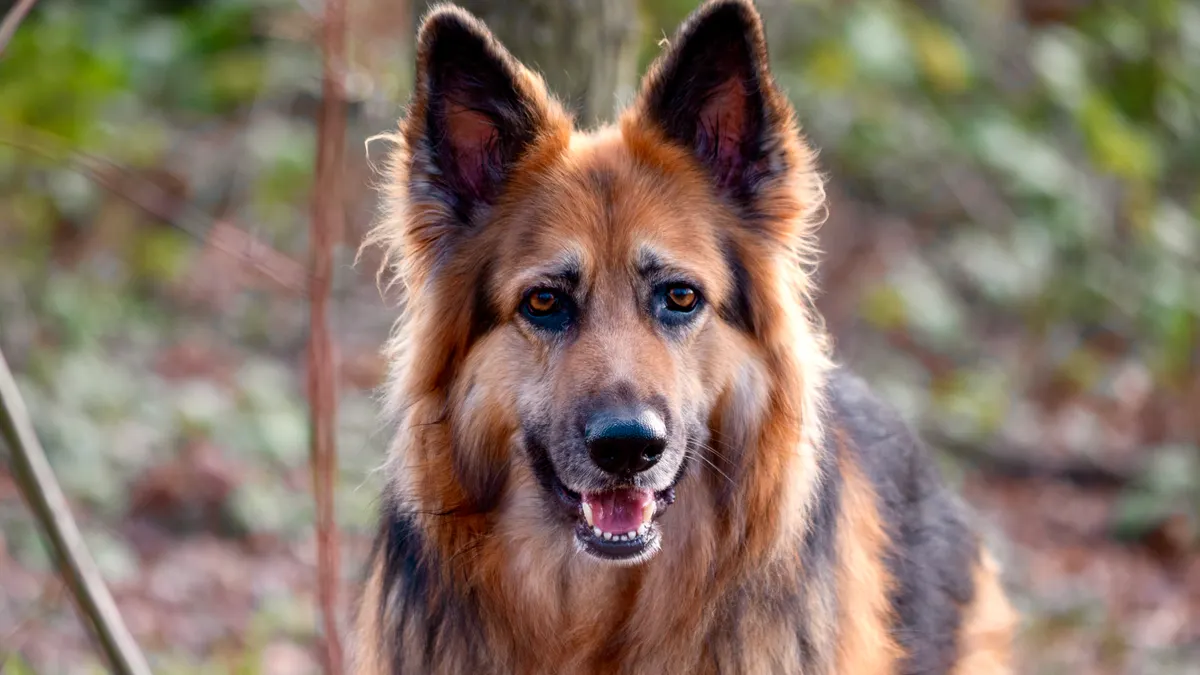
German Shepherd weight chart
- Adult weight, male
- 30–40 kg (66–88 lb)
- Adult weight, female
- 22–32 kg (49–71 lb)
- Height, male
- 60–65 cm (24–26 in)
- Height, female
- 55–60 cm (22–24 in)
- Life expectancy
- 9–13 years
- Size
- large
- Energy level
- high
- Origin
- Germany
- Fully grown at
- about 18 months
German Shepherd puppy weight by month
Typical weight range at each age, based on the breed's adult range and standard growth curves. Dogs of this size reach adult weight at about 18 months. The daily energy is for a normally active puppy, with puppy food of 380 kcal/100 g.
| Age | Expected weight | kcal/day | Puppy food, g/day |
|---|---|---|---|
| 2 mo | 3.5–7 kg (8–15 lb) | 930 | 245 g |
| 3 mo | 6–11 kg (13–24 lb) | 1,200 | 315 g |
| 4 mo | 8–15 kg (18–33 lb) | 1,370 | 360 g |
| 5 mo | 10–19 kg (22–42 lb) | 1,480 | 390 g |
| 6 mo | 12–22 kg (26–49 lb) | 1,530 | 405 g |
| 8 mo | 15–28 kg (33–62 lb) | 1,570 | 415 g |
| 10 mo | 18–33 kg (40–73 lb) | 1,550 | 410 g |
| 12 mo | 20–36 kg (44–79 lb) | 1,530 | 405 g |
| 15 mo | 22–39 kg (49–86 lb) | 1,490 | 390 g |
| 18 mo | 22–40 kg (49–88 lb) | 1,470 | 385 g |
How much should an adult German Shepherd eat?
Daily energy need and dry food amount (360 kcal/100 g) by body weight. Neutered or calm dogs need the lower figures, intact or very active dogs the higher ones. Treats count toward the total and should stay under 10%.
| Body weight | Neutered or calm | Intact, normal activity | Very active |
|---|---|---|---|
| 22 kg (49 lb) | 1,000 kcal · 275 g | 1,140 kcal · 315 g | 1,420 kcal · 395 g |
| 27 kg (60 lb) | 1,160 kcal · 320 g | 1,330 kcal · 370 g | 1,660 kcal · 460 g |
| 31 kg (68 lb) | 1,290 kcal · 360 g | 1,470 kcal · 410 g | 1,840 kcal · 510 g |
| 36 kg (79 lb) | 1,440 kcal · 400 g | 1,650 kcal · 455 g | 2,060 kcal · 570 g |
| 40 kg (88 lb) | 1,560 kcal · 435 g | 1,780 kcal · 495 g | 2,230 kcal · 620 g |
Feeding notes for the German Shepherd
Nutrition-related tendencies reported for this breed. They are not a diagnosis: if your dog has symptoms, ask your vet.
Herding breed: bred for long working days and quick thinking. A family dog with moderate exercise often needs less than the table suggests, a working or sport dog more. Feed part of the daily ration through training and puzzle feeders, and count training treats in the daily total.
Hip and elbow dysplasia and joint problems: a lean body condition throughout life is the best protection; omega-3 (EPA + DHA) can support the joints of adult dogs.
Sensitive digestion is common: change food gradually over 7–10 days, choose a highly digestible food, and see the vet if diarrhoea, vomiting or weight loss persist.
Bloat (gastric dilatation-volvulus) risk: this is a deep-chested breed. Split the daily amount into 2–3 meals, use a slow feeder if the dog gulps, and avoid hard exercise for about an hour around meals. A swollen belly with unproductive retching is an emergency.
Skin allergies and itching are common: omega-3 fatty acids (EPA + DHA from fish oil) support the skin barrier. Recurrent itching, ear infections or paw licking can point to a food allergy; an elimination diet with a novel or hydrolysed protein takes about 8 weeks.
Large or giant breed puppy: feed a large-breed puppy food with controlled calcium, do not add calcium supplements and keep the puppy slim. Fast growth from overfeeding is a main cause of skeletal problems.
Very active breed: a working or sporting dog can need 20–50% more than the table on training days. Adjust the amount by body condition, not by habit.
Get an exact plan for your own dog
The tables show typical values. The free DogDietLab report calculates the daily amount for your dog from its own weight, age, activity and health, and checks the food you use.
Frequently asked questions
How much should an adult German Shepherd eat per day?
A neutered dog of this breed weighing 31 kg (68 lb) with normal activity needs about 1,290 kcal per day, roughly 360 g of dry food at 360 kcal/100 g. Intact or very active dogs need more. Always check the energy content on your own food's label.
How much should a German Shepherd puppy weigh at 6 months?
At 6 months most puppies of this breed weigh about 12–22 kg (26–49 lb). Adult weight is reached at around 18 months.
What is the ideal weight of an adult German Shepherd?
The typical adult range is 22–32 kg (49–71 lb) for females and 30–40 kg (66–88 lb) for males. Within the range, body condition matters more than the scale: the ribs should be easy to feel and the waist visible from above.
Similar breeds
- Bergamasco Sheepdog
- White Swiss Shepherd
- Briard
- Bouvier des Flandres
- Old English Sheepdog
- Czechoslovakian Wolfdog
- Rough Collie
- Smooth Collie