
Breed feeding guide
Dobermann: weight chart and how much to feed
The Dobermann is a large breed (origin: Germany). Adult females typically weigh 32–35 kg (71–77 lb) and males 40–45 kg (88–99 lb), with a life expectancy of about 10–13 years. Below you will find the expected weight month by month, the daily calorie need and a breed-specific feeding checklist.
Prepared by the DogDietLab nutrition team · Updated: November 2026
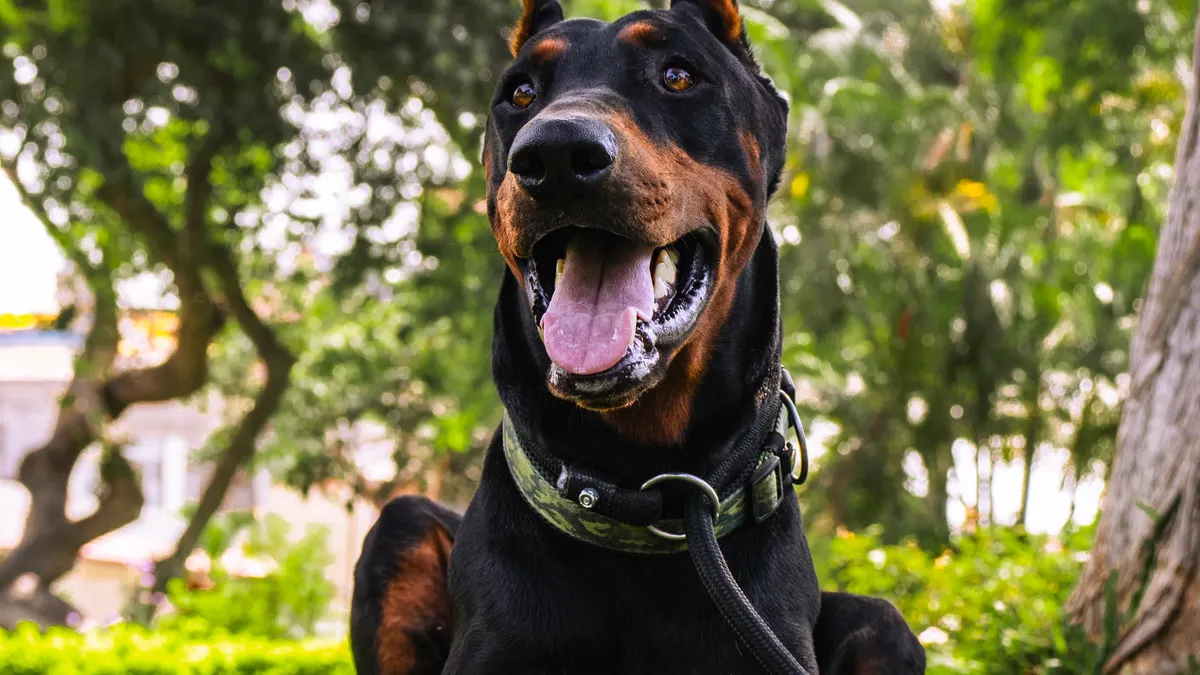
Dobermann weight chart
- Adult weight, male
- 40–45 kg (88–99 lb)
- Adult weight, female
- 32–35 kg (71–77 lb)
- Height, male
- 68–72 cm (27–28 in)
- Height, female
- 63–68 cm (25–27 in)
- Life expectancy
- 10–13 years
- Size
- large
- Energy level
- high
- Origin
- Germany
- Fully grown at
- about 18 months
Dobermann puppy weight by month
Typical weight range at each age, based on the breed's adult range and standard growth curves. Dogs of this size reach adult weight at about 18 months. The daily energy is for a normally active puppy, with puppy food of 380 kcal/100 g.
| Age | Expected weight | kcal/day | Puppy food, g/day |
|---|---|---|---|
| 2 mo | 5.5–7.5 kg (12–17 lb) | 1,090 | 285 g |
| 3 mo | 8.5–12 kg (19–26 lb) | 1,390 | 365 g |
| 4 mo | 12–17 kg (26–37 lb) | 1,600 | 420 g |
| 5 mo | 15–21 kg (33–46 lb) | 1,730 | 455 g |
| 6 mo | 18–25 kg (40–55 lb) | 1,790 | 470 g |
| 8 mo | 22–31 kg (49–68 lb) | 1,830 | 480 g |
| 10 mo | 26–37 kg (57–82 lb) | 1,810 | 475 g |
| 12 mo | 29–41 kg (64–90 lb) | 1,780 | 470 g |
| 15 mo | 31–44 kg (68–97 lb) | 1,730 | 455 g |
| 18 mo | 32–45 kg (71–99 lb) | 1,710 | 450 g |
How much should an adult Dobermann eat?
Daily energy need and dry food amount (360 kcal/100 g) by body weight. Neutered or calm dogs need the lower figures, intact or very active dogs the higher ones. Treats count toward the total and should stay under 10%.
| Body weight | Neutered or calm | Intact, normal activity | Very active |
|---|---|---|---|
| 32 kg (71 lb) | 1,320 kcal · 365 g | 1,510 kcal · 420 g | 1,880 kcal · 525 g |
| 35 kg (77 lb) | 1,410 kcal · 390 g | 1,610 kcal · 450 g | 2,010 kcal · 560 g |
| 39 kg (86 lb) | 1,530 kcal · 425 g | 1,750 kcal · 485 g | 2,180 kcal · 605 g |
| 42 kg (93 lb) | 1,620 kcal · 450 g | 1,850 kcal · 515 g | 2,310 kcal · 640 g |
| 45 kg (99 lb) | 1,700 kcal · 475 g | 1,950 kcal · 540 g | 2,430 kcal · 675 g |
Feeding notes for the Dobermann
Nutrition-related tendencies reported for this breed. They are not a diagnosis: if your dog has symptoms, ask your vet.
Pinscher, schnauzer, molosser or mountain-dog type: often muscular and heavy-boned. The heavier types put on weight easily once growth ends, so weigh the food, keep the dog lean to spare the joints and avoid hard exercise straight after meals.
Dilated cardiomyopathy (DCM) occurs in this breed: ask about heart screening, and avoid grain-free foods heavy in peas, lentils or potatoes unless the vet recommends them. Taurine can be checked with a blood test.
Copper storage liver disease occurs in this breed: avoid copper-rich extras such as liver and organ meat in large amounts and ask the vet about liver checks. A low-copper diet is prescribed only after diagnosis.
Hypothyroidism is more common: if the dog gains weight despite measured portions, have the thyroid checked before cutting the food further.
Bloat (gastric dilatation-volvulus) risk: this is a deep-chested breed. Split the daily amount into 2–3 meals, use a slow feeder if the dog gulps, and avoid hard exercise for about an hour around meals. A swollen belly with unproductive retching is an emergency.
Large or giant breed puppy: feed a large-breed puppy food with controlled calcium, do not add calcium supplements and keep the puppy slim. Fast growth from overfeeding is a main cause of skeletal problems.
Very active breed: a working or sporting dog can need 20–50% more than the table on training days. Adjust the amount by body condition, not by habit.
Get an exact plan for your own dog
The tables show typical values. The free DogDietLab report calculates the daily amount for your dog from its own weight, age, activity and health, and checks the food you use.
Frequently asked questions
How much should an adult Dobermann eat per day?
A neutered dog of this breed weighing 38 kg (84 lb) with normal activity needs about 1,500 kcal per day, roughly 415 g of dry food at 360 kcal/100 g. Intact or very active dogs need more. Always check the energy content on your own food's label.
How much should a Dobermann puppy weigh at 6 months?
At 6 months most puppies of this breed weigh about 18–25 kg (40–55 lb). Adult weight is reached at around 18 months.
What is the ideal weight of an adult Dobermann?
The typical adult range is 32–35 kg (71–77 lb) for females and 40–45 kg (88–99 lb) for males. Within the range, body condition matters more than the scale: the ribs should be easy to feel and the waist visible from above.
Similar breeds
- Šarplaninac
- Dogo Argentino
- Estrela Mountain Dog
- Giant Schnauzer
- Tornjak
- Bernese Mountain Dog
- Karst Shepherd
- Hovawart